Abydos – Temple of Seti I and the Osireion
Admission to the Temple of Seti I and the Osiris Chapel in Abydos; seasonal opening hours and photography rules should be checked before your visit.
At a glance
- Departs
- Daily
The short answer
Temples of Abydos and Osiris Temple Entry Ticket grants admission to the Temple of Seti I and Osiris Chapel in Abydos, booked and arranged by Discovery Tours Egypt.
- Archaeology & history
- Cultural
Snapshot
Good to know
- Time to allow
- Self-paced
- Travel style
- Self-Guided Entry
- Arranged by
- Arranged by Discovery Tours Egypt
- Destinations
- Temples of Abydos, including the Temple of Seti I and Osiris Chapel
- Includes
- Admission to the Temples of Abydos and Osiris Temple, as specified on booking confirmation · Your PDF ticket will be emailed after you book
- Best for
- Ancient Egyptian history enthusiasts · Independent visitors · Travellers interested in Osiris · Visitors studying Egyptian reliefs
Best time to go
October to April is generally more comfortable for walking, with milder daytime conditions than the hot summer months. Arrive early where possible, and check current opening hours before travelling; Ramadan and public holidays can affect schedules and visitor numbers.
- Tickets are selected, booked and arranged by a licensed Egyptian tour operator.
- The booking confirmation specifies the monuments covered by the ticket.
- A PDF ticket is sent by email after booking confirmation.
- Transport, meals and drinks are listed as exclusions.
- The ticket is for self-guided admission, not a guided visit.
02Overview
A first look
Abydos is an ancient cult centre for Osiris located beside the modern village of al-Balyana in Sohag Governorate. The principal monuments are Seti I’s mortuary temple and the adjacent Osireion, home to the Abydos King List.
Background
The facts
Abydos is an archaeological site in Upper Egypt’s Nile Valley and an important ancient Egyptian religious centre associated with Osiris, god of the dead and rebirth. Its remains span the First Intermediate Period through the New Kingdom.
The Temple of Seti I is the site’s best-known monument. Begun during the 19th Dynasty, it was completed by Ramesses II. The ticket covers admission to the Temple of Seti I and the Osiris Chapel within the Abydos archaeological area.
Abydos drew pilgrims to the cult of Osiris for centuries. The site preserves ceremonial routes, votive stelae, royal cartouches and relief scenes associated with the Abydos King List, a chronological record of Egyptian kings.
Opening hours and photography rules vary, so check current information before visiting and ask at the entrance about photography. The visit is self-guided. The ticket covers the monuments named above; transport, meals and drinks are excluded. The PDF ticket is sent by email after booking, and a printed copy may be needed.
Named in this entry
Abydos·The Temple of Seti I·Osiris Chapel·Osiris·Ramesses II·The Abydos King List·Nile Valley·Upper Egypt·The First Intermediate Period·New Kingdom·19th Dynasty
Suited to
Is this for you?
Yes, if
- This entry ticket suits independent adults, archaeology enthusiasts and older children interested in Seti I’s reliefs and the Abydos King List. It gives visitors time to explore the archaeological area at their own pace, without a guided visit included.
Maybe not, if
- Choose another site if you need step-free paths or easy stroller access. Abydos also involves outdoor walking, so visitors who struggle with uneven ground, heat or limited shade may prefer a more accessible indoor attraction.
What lingers
- 01Visit Seti I Temple at Abydos – detailed reliefs including the Abydos King List on the south wall.
- 02Explore the Osireion (Osiris cenotaph) behind the temple – unusual sub-structure and monumental stonework.
- 03Our Egyptologists provide iconographic readings of Seti I and Ramesses II reliefs; guided explanations last 60–90 minutes.
- 04We avoid the midday crowds – timed visits tend to be scheduled in the morning before coach arrivals.
- 05Limited shade at the site and uneven ancient stone underfoot – bring sun protection and sturdy walking shoes.
Worth knowing
How this compares
Bundled packages can combine admission to several sites. We arrange a single-site ticket for the monuments specified on the booking confirmation, so you choose which places to enter.
The fine print
What's included – and what isn't
Included
- Entry ticket to the Temples of Abydos and Osiris Temple, as specified in the booking confirmation
- Your PDF ticket will be emailed after you book
Not included
- Travel to and from the site
- Professional Egyptologist guide, available to book separately if required
- Food and beverages
- Photography permit, if required by the site authority
- A paper ticket, should the venue not accept mobile or on-screen copies
Field notes
From our Egyptologists
- 01
Check current opening hours before setting out, as they vary by season.
- 02
Ask at the entrance about photography rules before taking pictures of the reliefs.
- 03
Print the PDF if you cannot confirm that the entrance accepts tickets shown on a screen.
- 04
Allow time to examine the Temple of Seti I’s raised reliefs and hieroglyphic inscriptions.
Tailor it
Make it yours
The ticket covers the monuments specified on your booking confirmation; transport, meals and a professional Egyptologist guide are not included. You can arrange a guide separately, and should check whether a photography permit is required and whether the site accepts a PDF ticket on a phone.
All requests handled by your dedicated specialist before booking.
Where it fits
Abydos is a long overland visit from Luxor, so it fits best as a dedicated stop on a Nile itinerary rather than a brief detour between temples. Pair it with time in Luxor to compare the New Kingdom reliefs at Seti I’s temple with the monuments on the Luxor West Bank.
While you're here
Worth pairing
- OsireionRight here
- Umm el-Qa'abRight here
- Shunet el-ZebibRight here
Why book this with us
Three reasons, stated plainly
01
Choose single-site admission rather than a bundled ticket
02
Ticket specifies which Abydos monuments are included
03
Receive the ticket as a PDF by email
·In summary
The Temple of Seti I at Abydos was begun in the 19th Dynasty and completed by Ramesses II. The archaeological area preserves remains from the First Intermediate Period through the New Kingdom, including relief scenes linked to the Abydos King List.
Asked & answered
Frequent questions
01What are the opening hours for Abydos and the Osireion?
Abydos sites are generally open daily from sunrise to sunset. Seasonal changes and Ramadan can alter hours; we confirm exact times before travel. Early morning light is best for the Seti I reliefs and there is very limited shade at midday. As a licensed Egyptian tour operator we advise an early start to avoid heat and crowds.02Is the Seti I temple the same as the Osireion (Osiris Temple)?
No – the Seti I temple and the Osireion are adjacent but distinct monuments. The Seti I temple houses the Abydos King List and carved reliefs; the Osireion is a separate subterranean cenotaph complex with different architecture. Both merit close study; our Egyptologists point out links between the inscriptions and funerary symbolism. Visitors should expect low light and uneven steps in parts of the Osireion.03How long should I allow to visit both temples properly?
Allow about 1.5–2.5 hours on-site to see Seti I and the Osireion at a steady pace. That includes time for photographs, explanations of the Abydos King List, and short rests in shaded spots. Add travel time from your hotel; if combined with another site we usually recommend a full day. We operate private guided visits rather than large coach groups to give you time on site.04Are entrance fees and permits included in the booking price?
Standard site entrance fees are included in the booking price unless we state otherwise. Special-permit requirements, conservation access, commercial filming, or tripod permissions can incur extra charges; we will confirm any extras at booking. Pyramid-interior or premium tomb access follows separate rules and is not bundled by default. As a licensed Egyptian tour operator we handle permit applications when required.05Can people with limited mobility visit Abydos and the Osireion?
Accessibility is limited: there are uneven stone floors, steps, and some sandy approaches. Wheelchair access across the main Seti I temple precinct is partial at best; the Osireion involves steps and low-light corridors. We can arrange shorter visits, a closer drop-off, and a porter on request – please state mobility needs when you enquire so we can plan. Expect firm footwear and a slow pace.06Am I allowed to take photographs inside the temples?
Photography for private, non-commercial use is generally permitted, but rules change and restrictions may apply. Flash, tripods, drones, and commercial filming often require prior permission or an additional fee; conservation rules can prohibit close-up flash photography on fragile reliefs. Our Egyptologists and local permits team will advise on current restrictions and can arrange permissions where possible. If you require professional filming, tell us at enquiry stage.
Last updated 6 September 2026Product ID: TKT-NIL-235759
You Might Also Like
 Aswan
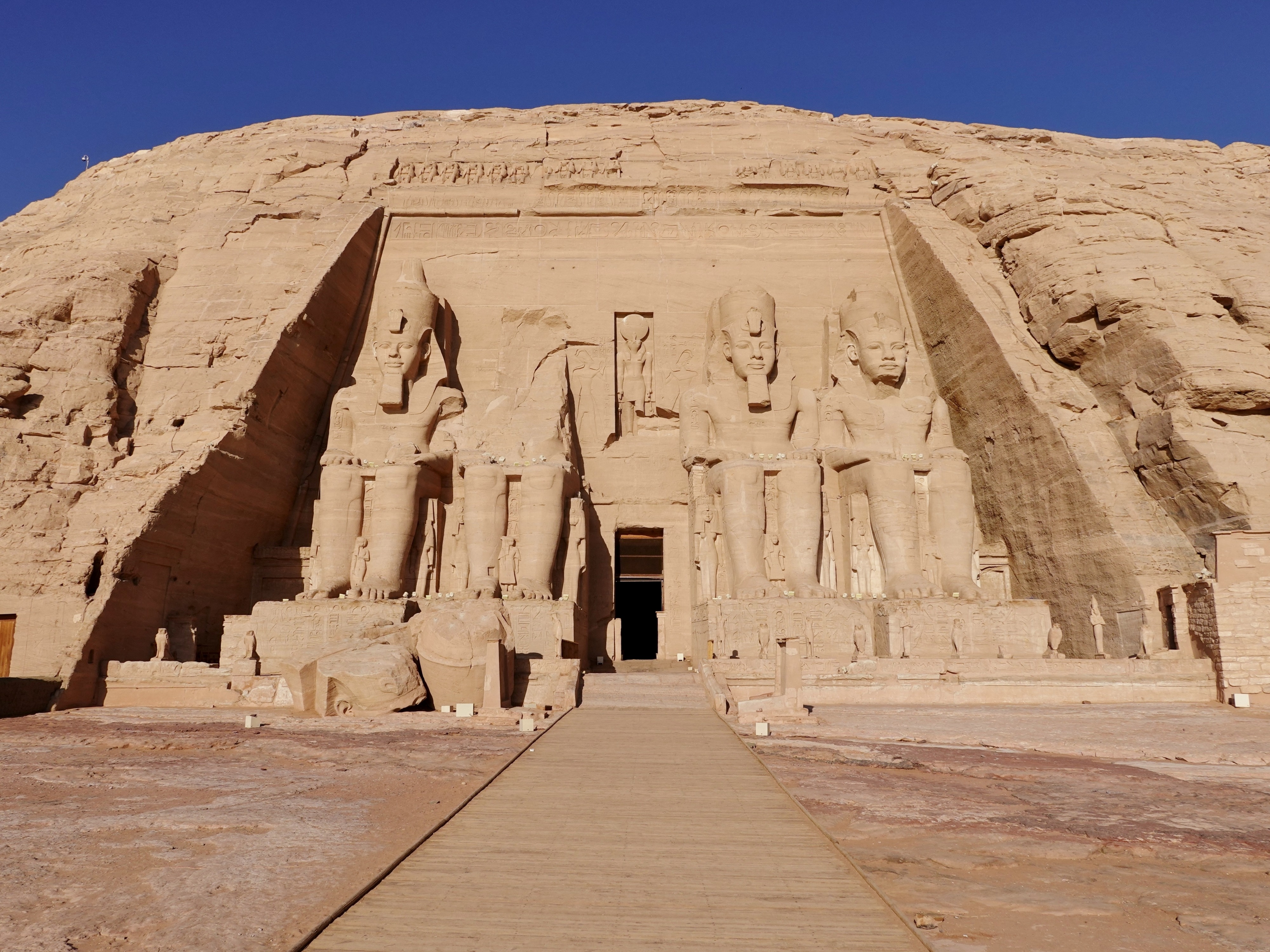
AswanAbu Simbel Temples – Ramses II & Nefertari (Aswan)
Abu Simbel lies about 280 km south of Aswan and is reached by a 40‑minute flight or a 3.5–4 hour road transfer. As a licensed Egyptian tour operator, we arrange private early flights and timed private‑car arrivals so clients avoid coach crowds and the hottest hours. The twin sites are the Great Temple of Ramesses II and the Small Temple of Nefertari, moved to higher ground between 1964 and 1968 during an international relocation campaign and included in the Nubian Monuments UNESCO listing. Trade‑offs: a same‑day return requires an early start and either a long road journey or a small‑plane seat; shade is limited on the forecourt.
From £24
AswanAbu Simbel Temples – Sun Festival (22 Feb / 22 Oct)
See the twice-yearly solar alignment at Abu Simbel on 22 February or 22 October when sunlight reaches the inner sanctuary. The twin rock temples were carved for Ramses II and honour Amun‑Re and Ra. They were moved in 1964–1968 and form part of the UNESCO World Heritage 'Nubian Monuments from Abu Simbel to Philae'. Abu Simbel is approximately 280 km south of Aswan (about 3.5 hours by road). We are a licensed Egyptian tour operator and can arrange timed-entry tickets, private road transfers and an Egyptologist briefing when available. Unlike same-day coach runs, we recommend an overnight in Aswan to avoid very early road departures and rushed visits; expect limited shade at the forecourt and large crowds on festival dates.
From £27
 Cairo
CairoAl-Moez Street Entry Ticket
Al-Moez Street is a historic thoroughfare in Cairo’s Islamic quarter, lined with monuments and architecture from the Fatimid and Mamluk periods. The entry ticket grants access to the street and its visible monuments, with views of landmarks such as Bab Zuweila and the Mosque of Al-Hakim. Unlike admission to a single indoor site, this is an open historic quarter, so the visit takes place along a public street. Opening hours can vary by season and during special events; check current information before visiting. Discovery Tours Egypt arranges the ticket, which is sent by email as a PDF after booking.
From £5