Tuna El-Gebel (Hermopolis) Guided Visit
Entry to Tuna El-Gebel’s necropolis and catacombs, with painted chapels and burial shafts; opening hours vary seasonally, so check before visiting.
At a glance
- Departs
- Daily
The short answer
Tuna El-Gebel Entry Ticket grants admission to the necropolis at Hermopolis Magna near Ashmunein, booked and arranged by Discovery Tours Egypt.
- Archaeology & history
- Cultural
Snapshot
Good to know
- Time to allow
- Open hours vary seasonally
- Travel style
- Self-Guided Entry
- Arranged by
- Arranged by Discovery Tours Egypt
- Destinations
- Tuna El-Gebel
- Includes
- Entry to the Tuna El-Gebel site · PDF ticket sent by email after booking
- Best for
- Independent travellers · Ancient history enthusiasts · Visitors exploring Middle Egypt
Best time to go
October to April is generally more comfortable, with milder daytime conditions in the Nile Valley; summer can be very hot, so an early visit is preferable. Opening hours may change seasonally and during Ramadan or major public holidays, so check the official information before setting out.
- Discovery Tours Egypt is a licensed Egyptian tour operator.
- The ticket is booked and arranged through Discovery Tours Egypt.
- The ticket is delivered as a PDF attachment by email after booking confirmation.
- The ticket covers site entry; transport, meals and interpretation services are excluded.
02Overview
A first look
Tuna El-Gebel is the necropolis serving ancient Hermopolis (Khmun) on the Nile's west bank near Minya. The site contains the tomb of Petosiris, remains of a Khnum shrine and large catacombs used for ibis burials.
Background
The facts
Tuna El-Gebel is the necropolis of ancient Hermopolis Magna, near modern Ashmunein in Egypt’s Nile Valley. An entry ticket grants admission to the archaeological areas open to visitors on the day, subject to site rules and conservation restrictions.
The complex includes underground catacombs, burial shafts, painted chapels and rock-cut reliefs. It forms part of the wider archaeological landscape around Hermopolis Magna; no reliable visitor-route distances or walking times are specified for this ticket.
Hermopolis Magna was an important centre associated with the worship of Thoth. Tuna El-Gebel’s tombs and decoration span the Late Period and Ptolemaic eras, and include reliefs depicting ram-headed falcons.
Opening hours vary by season and may change for holidays or conservation work. Check current information before travelling or arrive early. Photography rules can vary, so check signage at the entrance. The ticket is delivered by email as a PDF; some entrances may require a printed copy, so print it if in doubt.
Named in this entry
Tuna El-Gebel·Hermopolis Magna·Ashmunein·Thoth·Nile Valley·Late Period·Ptolemaic era·Egypt
Suited to
Is this for you?
Yes, if
- This entry ticket suits adults and older children interested in archaeology, ancient burial practices and quieter sites in Middle Egypt. It is for independent visitors comfortable walking over uneven ground and entering low-light underground spaces.
Maybe not, if
- Choose a more accessible site if you need step-free access or plan to use a pushchair. It may also be a poor fit for visitors who prefer fully interpreted visits, as interpretation is not included.
What lingers
- 01Explore the Tomb of Petosiris – painted chapel and reliefs within Tuna el-Gebel necropolis, Hermopolis Magna.
- 02See the ibis catacombs: long rock-cut galleries once used for millions of mummified ibises.
- 03Greco-Roman funerary chapels and rock-cut tombs display bilingual inscriptions in Egyptian and Greek.
- 04Less visited than Luxor sites – Tuna el-Gebel offers quieter study of tomb decoration and funerary practice.
- 05Limited shade and uneven stone underfoot; allow sensible footwear and sun protection for a 60–90-minute visit.
- 06Located on the west bank near Mallawi, Minya governorate; accessible by private car from Minya town.
Worth knowing
How this compares
Many archaeological-site tickets provide admission only; this ticket also includes no transport, meals or interpretation services. Unlike a guided visit, it leaves visitors to explore the areas open that day independently.
The fine print
What's included – and what isn't
Included
- Entry ticket to Tuna El-Gebel
Not included
- Professional interpretation services, book separately if required
- Travel to and from the site
- Food and drinks
- Photography permits, if required; check the entrance signage
- Gratuities
Field notes
From our Egyptologists
- 01
Print the emailed PDF if you are unsure whether the entrance accepts tickets displayed on a phone.
- 02
Check photography signage at the entrance before using a camera.
- 03
Check current opening information before travelling, as hours vary seasonally.
- 04
Arriving early can help you make the most of a visit when opening hours are limited.
Tailor it
Make it yours
This is an entry ticket only; transport, meals and interpretation are not included. The ticket is delivered as a PDF by email, and printing it is prudent if you cannot confirm that the entrance accepts a mobile display.
All requests handled by your dedicated specialist before booking.
Where it fits
Tuna El-Gebel fits a Middle Egypt itinerary between Minya and Asyut, alongside visits to Tell el-Amarna and the remains of Hermopolis Magna. Allow time for the drive from Minya; this is not a site to add as a short stop on a Cairo day trip.
While you're here
Worth pairing
- Hermopolis Magna at el-AshmuneinRight here
- Tell el-AmarnaRight here
- Beni HasanRight here
Why book this with us
Three reasons, stated plainly
01
Ticket arranged for the less-visited Tuna El-Gebel necropolis
02
PDF admission ticket sent by email after booking
03
Entry-only booking keeps transport and interpretation separate
·In summary
Tuna El-Gebel is the burial ground of Hermopolis Magna, near modern Ashmunein in the Nile Valley. Its archaeological remains include catacombs, painted chapels and tombs dating to the Late Period and Ptolemaic eras. The admission ticket is sent as a PDF by email after booking.
Asked & answered
Frequent questions
01What is Tuna El-Gebel?
Tuna El-Gebel is the necropolis of ancient Hermopolis (Khmun), notable for the Ptolemaic tomb of Petosiris. The site also contains rock-cut burial shafts, the ram catacombs and a Greco-Roman cemetery with painted tombs. Our Egyptologists explain the inscriptions and animal-cult remains on private visits; the site is far quieter than Luxor’s necropoleis.02How long should I allow at Tuna El-Gebel?
Allow 60–90 minutes to see the main tombs, catacombs and the Petosiris monument. Walking is over uneven stone and sand and some chambers have low ceilings and limited light. We can extend the visit if you combine Tuna El-Gebel with other Minya-region sites.03How do I get to Tuna El-Gebel?
Tuna El-Gebel is reached by private car from Minya, Mallawi or nearby Nile stops; public transport is irregular. We arrange hotel or cruise-landing pickups and handle local permits and parking. As a licensed Egyptian tour operator we prefer private transfers rather than large coach groups because the site is small and sensitive.04Is Tuna El-Gebel accessible to wheelchair users?
No – Tuna El-Gebel has uneven terrain, rock-cut shafts and narrow steps that limit wheelchair access. A short flat stretch exists by the modern entrance but most highlights require steps or stooping. Tell us your mobility needs and we will plan the easiest viewing points and driver drop-off.05Are visitors allowed to take photographs at Tuna El-Gebel?
Yes – still photography for personal use is generally permitted, but flash and tripods may be restricted. Guards and signs set local rules and lighting inside tombs is often dim, so no‑flash images work best. Our Egyptologists will confirm the day’s restrictions and advise on conservation-sensitive areas.06Are there toilets or refreshments at Tuna El-Gebel?
Facilities are basic: a small ticket office and simple toilets; shops and cafés are very limited. Bring water, sunscreen and a hat–shade is scarce and midday heat is a real factor. On our private visits we supply bottled water and can schedule a shaded stop on request.
Last updated 27 February 2026Product ID: TKT-NIL-507229
You Might Also Like
 Aswan
AswanAbu Simbel Temples – Ramses II & Nefertari (Aswan)
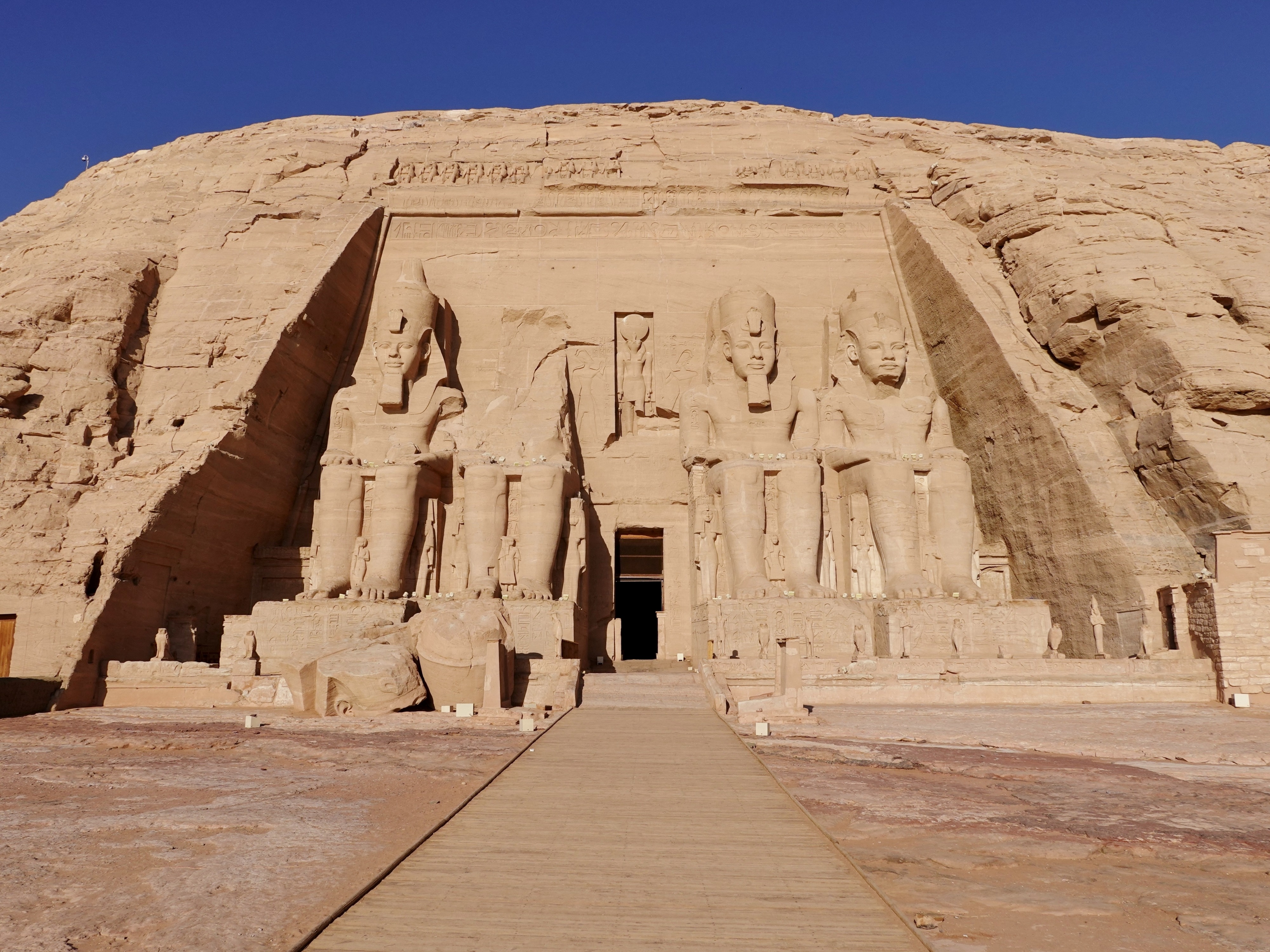
Abu Simbel lies about 280 km south of Aswan and is reached by a 40‑minute flight or a 3.5–4 hour road transfer. As a licensed Egyptian tour operator, we arrange private early flights and timed private‑car arrivals so clients avoid coach crowds and the hottest hours. The twin sites are the Great Temple of Ramesses II and the Small Temple of Nefertari, moved to higher ground between 1964 and 1968 during an international relocation campaign and included in the Nubian Monuments UNESCO listing. Trade‑offs: a same‑day return requires an early start and either a long road journey or a small‑plane seat; shade is limited on the forecourt.
From £24
AswanAbu Simbel Temples – Sun Festival (22 Feb / 22 Oct)
See the twice-yearly solar alignment at Abu Simbel on 22 February or 22 October when sunlight reaches the inner sanctuary. The twin rock temples were carved for Ramses II and honour Amun‑Re and Ra. They were moved in 1964–1968 and form part of the UNESCO World Heritage 'Nubian Monuments from Abu Simbel to Philae'. Abu Simbel is approximately 280 km south of Aswan (about 3.5 hours by road). We are a licensed Egyptian tour operator and can arrange timed-entry tickets, private road transfers and an Egyptologist briefing when available. Unlike same-day coach runs, we recommend an overnight in Aswan to avoid very early road departures and rushed visits; expect limited shade at the forecourt and large crowds on festival dates.
From £27
 Cairo
CairoAl-Moez Street Entry Ticket
Al-Moez Street is a historic thoroughfare in Cairo’s Islamic quarter, lined with monuments and architecture from the Fatimid and Mamluk periods. The entry ticket grants access to the street and its visible monuments, with views of landmarks such as Bab Zuweila and the Mosque of Al-Hakim. Unlike admission to a single indoor site, this is an open historic quarter, so the visit takes place along a public street. Opening hours can vary by season and during special events; check current information before visiting. Discovery Tours Egypt arranges the ticket, which is sent by email as a PDF after booking.
From £5