Skip to content
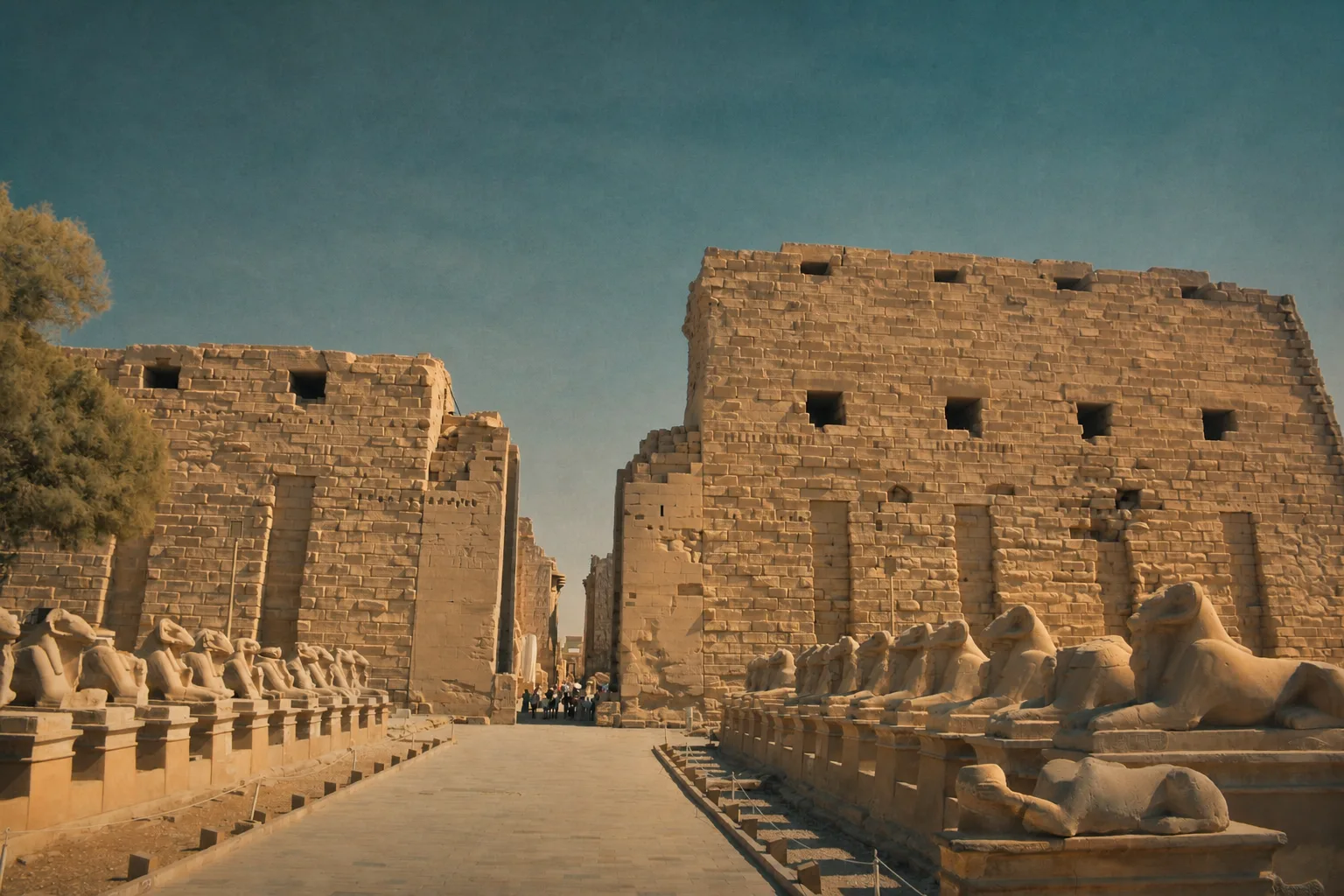
Sphinx avenue at Karnak Temple, stone guardians in the first light before the crowds

All Faiths · Year-Round

An issue of one

Egypt holds the oldest pilgrimage roads in the Western world.

Three faiths have sent pilgrims here for twenty centuries. The routes are still intact, the monasteries still inhabited, the bushes still burning. No other country holds this much living religious history inside borders you can cross in a fortnight.

Why Egypt

Egypt is not one pilgrimage destination. It is three, stacked on top of each other. Coptic Christians have worshipped here since Saint Mark arrived in Alexandria around 42 AD – before Rome had its own bishop. The Holy Family walked 3,500 kilometres through Egypt, and the 25 sites they rested at are all still in use. Saint Catherine's Monastery in the Sinai, founded 548 AD, contains what it has always contained: the Burning Bush. And in the alleys of Old Cairo, the world's oldest university still issues religious rulings from the same courtyard where it opened in 970 AD.

We have been planning pilgrimage trips here for over 20 years – Coptic trail groups, parish tours, Islamic heritage journeys, Jewish heritage tours, and travellers who want all three in one fortnight. Egypt holds them all, and none of them require a long search – they are in the same city, sometimes the same street.

"The light in the crypt of Abu Sarga Church is the same light that has been falling through that ceiling for sixteen hundred years."

— Egypt Discovery, Cairo desk

Three traditions

Christianity. Islam. Judaism. In the same quarter.

Coptic Christianity

Est. c. 42 AD

Egypt has the oldest continuous Christian community in Africa and the Middle East. Saint Mark the Evangelist is believed to have founded the church in Alexandria around 42 AD – before Rome had its own bishop and before Christianity had reached most of Europe. Around ten million Coptic Christians live in Egypt today, their liturgical language the last surviving form of ancient Egyptian. The monasteries built by their ancestors from the 3rd century onward – in the Eastern Desert valleys, along the Nile banks, deep in the Sinai – are among the oldest continuously inhabited buildings on earth. The Monastery of Saint Anthony, founded 356 AD, is the oldest Christian monastery in operation anywhere in the world.

Key sites: Abu Sarga Church · Hanging Church · Saint Catherine's Monastery · Monastery of Saint Anthony · Monastery of Saint Paul · Wadi El Natrun monasteries
Islamic Heritage

Est. 641 AD · Flowering 870–1500 AD

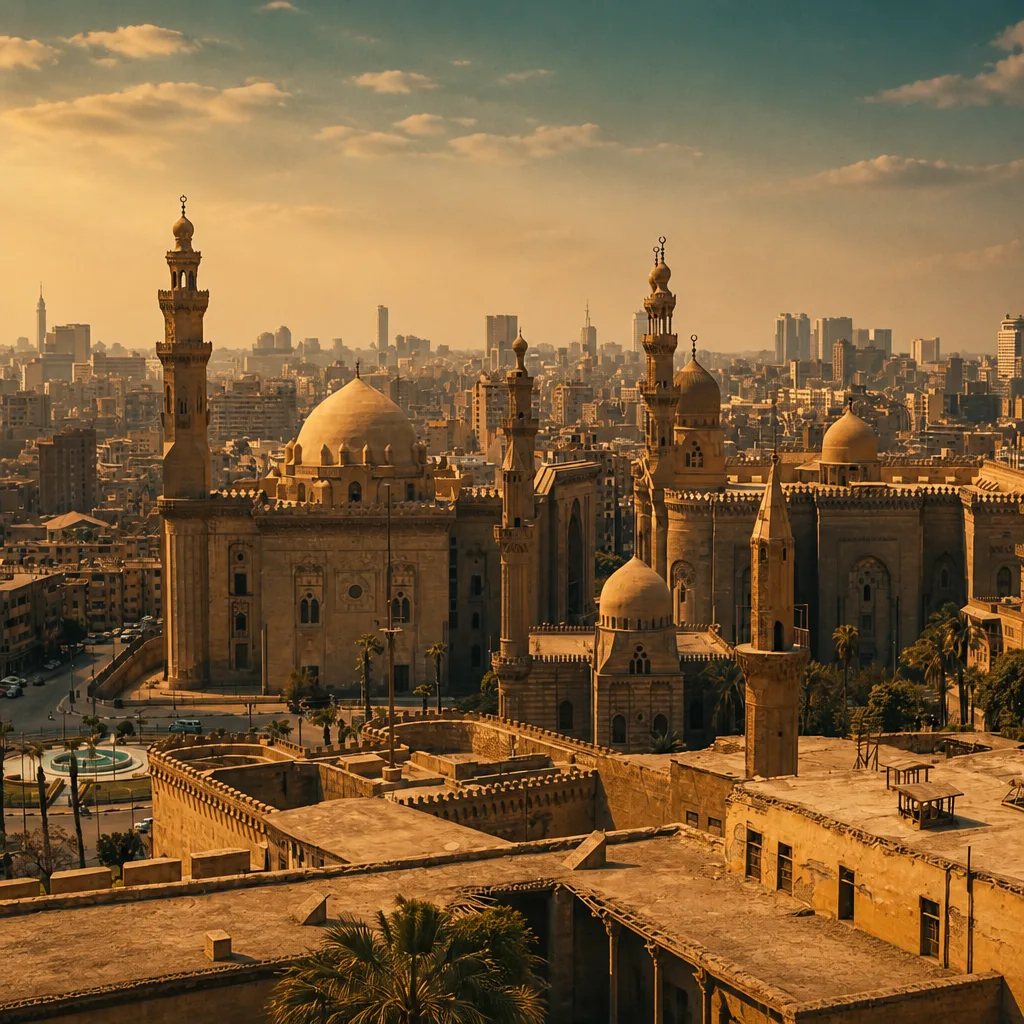
Cairo holds the densest concentration of intact medieval Islamic monuments in the world – over 600 catalogued structures. The Mosque of Ibn Tulun, completed 879 AD, is the oldest intact mosque in Cairo and among the oldest anywhere. Al-Azhar, founded in 970 AD by the Fatimid caliph al-Mu'izz, became the world's oldest university within years of opening and still issues religious rulings from the same courtyard. Sultan Hassan Mosque, built 1356–1363, is considered the pinnacle of Mamluk sacred architecture. These are not preserved ruins. The call to prayer reaches all five of them, five times daily.

Key sites: Al-Azhar Mosque · Mosque of Ibn Tulun · Sultan Hassan Mosque · Al-Rifa'i Mosque · Mosque of Muhammad Ali · Khan El-Khalili quarter

Jewish Heritage

Est. Biblical era · Documented from 3rd century BC

Old Cairo's Jewish heritage occupies the same quarter as its Coptic churches and Islamic mosques. The Ben Ezra Synagogue, rebuilt in 1115 by Abraham ben Ezra, stands on a site Coptic and Jewish tradition associates with the infant Moses. In 1896, its storage chamber yielded the Cairo Geniza – 200,000 fragments of medieval Jewish manuscripts spanning a thousand years of religious life, now held in the British Library, Cambridge, and St Petersburg. The Bassatine Cemetery, one of the oldest Jewish burial grounds in the world, lies just beyond the old city walls.

Key sites: Ben Ezra Synagogue · Bassatine Cemetery · Old Cairo (Babylon Fortress district)

Five dates

When this history was made.

  1. 42 AD

    Saint Mark brings Christianity to Alexandria.

    Decades before Rome had its own bishop, and centuries before most of Europe encountered the faith, Alexandria became one of Christianity's first cities. The Coptic church that grew from Saint Mark's mission has remained in Egypt uninterrupted for nearly two thousand years.

  2. 356 AD

    The world's oldest Christian monastery is founded in the Eastern Desert.

    After Saint Anthony the Great died – having lived as a hermit in the desert since c. 270 AD – his followers established a monastery at the site of his cell. The Monastery of Saint Anthony has been inhabited continuously ever since, making it the oldest Christian monastery in operation anywhere on earth.

  3. 548 AD

    Emperor Justinian I builds Saint Catherine's Monastery at the foot of Mount Sinai.

    The Byzantine emperor enclosed the site of the Burning Bush – the thorn bush where tradition holds God appeared to Moses – within a fortified stone monastery. The bush is still there. The monastery is structurally unchanged from the 6th century, its walls the same walls Justinian built.

  4. 970 AD

    Al-Azhar is founded in Cairo.

    The Fatimid caliph al-Mu'izz li-Din Allah builds a mosque in his new capital. Within two years it becomes a teaching institution. Al-Azhar University is today considered the world's oldest continuously operating university, and scholars still issue religious rulings from the same courtyard.

  5. 1115 AD

    Ben Ezra Synagogue is rebuilt in Old Cairo.

    Reconstructed by the Spanish rabbi Abraham ben Ezra on a site sacred to both Coptic and Jewish tradition, this building yields – seven centuries later – the Cairo Geniza: 200,000 medieval Jewish manuscript fragments discovered in its storage chamber in 1896 and now held in the British Library, Cambridge, St Petersburg, and elsewhere.

The route

The Holy Family Trail – a 3,500-kilometre living pilgrimage.

Matthew 2:13–15 records that the Holy Family fled to Egypt to escape Herod. What the Gospel does not record is the route, the stops, or the months. The Coptic Orthodox Church has kept that account. The Pope of the Coptic Orthodox Church has formally numbered and designated 25 stations – every site where tradition holds the family stopped, ate, slept, or sheltered.

The trail enters Egypt from Sinai in the northeast, curves through the Delta to Cairo, crosses the Nile at Maadi, swings west to the Wadi El Natrun monasteries, then follows the river south to Assiut – 3,500 kilometres in total. The final stop, al-Muharraq Monastery, is where Coptic tradition holds the family stayed longest: six months and ten days. Every one of the 25 sites is still active. None is a museum.

Old Cairo at dawn – stone walls and narrow lanes of the Babylon Fortress district
Old Cairo – the Babylon Fortress district, where three faiths share the same streets.

Eight key stations

  1. 01
    Farma (ancient Pelusium) The first point of entry from Sinai. The route records begin here.
  2. 02
    Mostorod – Al-Mahamma The Place of Rest. A 5th-century church and natural spring mark the site.
  3. 03
    The Virgin's Tree, Heliopolis A sycamore on the site of the original where the family rested. The current tree was planted in 1672. Still alive.
  4. 04
    Abu Sarga Church, Old Cairo The 5th-century crypt beneath the nave is, by Coptic tradition, the room where the Holy Family sheltered in Cairo.
  5. 05
    Maadi, Cairo The Nile crossing point. The family departed south by boat from here.
  6. 06
    Wadi El Natrun The cradle of Christian monasticism. Four monasteries from the 4th and 5th centuries remain active today.
  7. 07
    Gebel El-Teir, Minya Hill of the Birds – a cliff-top Coptic church, 246 steps above the Nile.
  8. 08
    Al-Muharraq Monastery, Assiut The southern terminus. Coptic tradition holds the Holy Family stayed here for 6 months and 10 days – the longest stop on the trail.

All 25 stations are designated by the Coptic Orthodox Church. We build itineraries around the eight above for travellers with 10–12 days, and a shorter selection for those combining the trail with Luxor or the Red Sea.

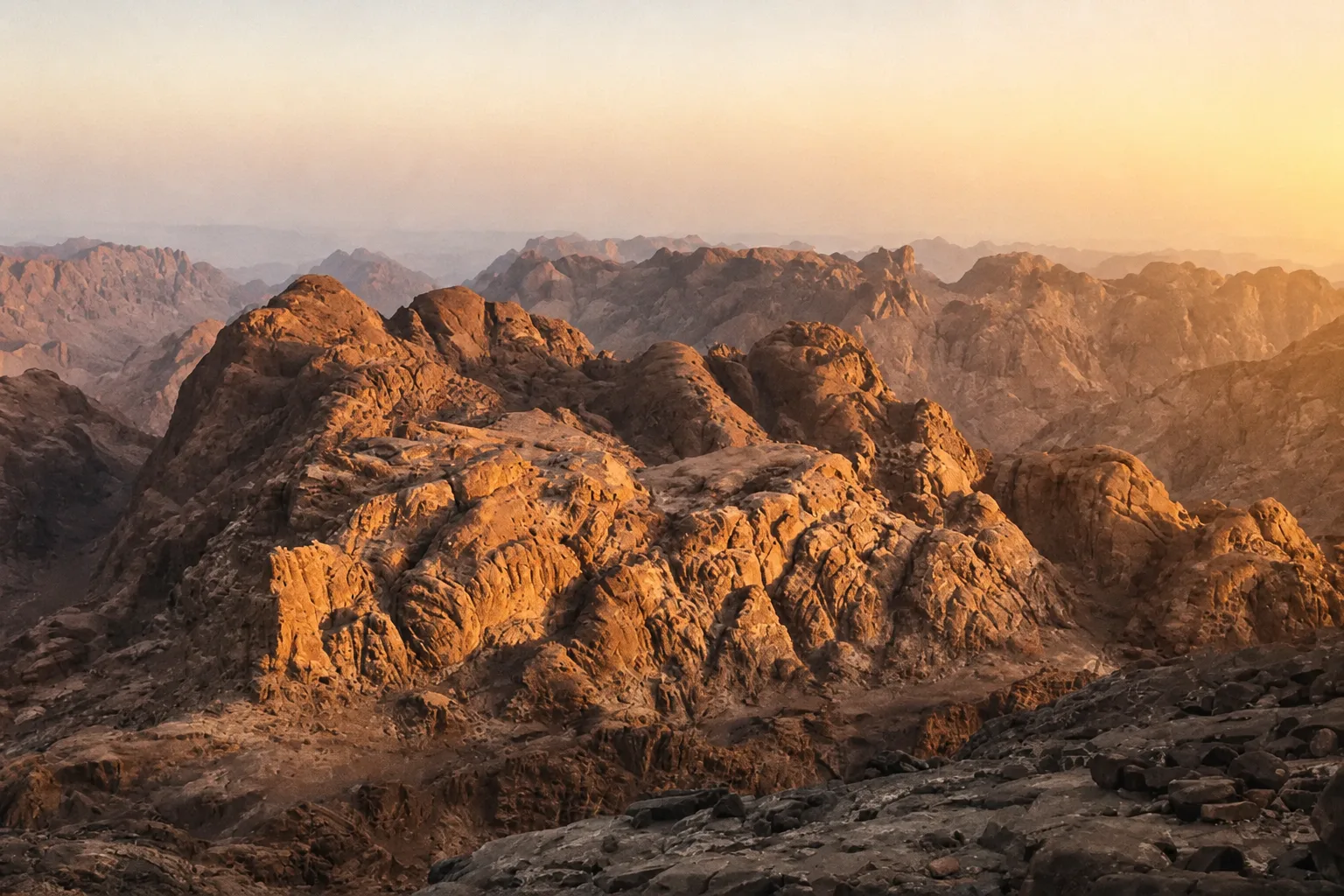
Sinai desert before first light – burnt-orange rock and pale sky

Saint Catherine's Monastery · Sinai · Founded 548 AD

The bush Moses stood before is still growing inside the monastery walls. The monks who tend it have tended it, in an unbroken line, for fourteen hundred years.

  • 548AD – founded by Emperor Justinian I
  • 2002UNESCO World Heritage Site designation
  • 2ndlargest collection of early codices after the Vatican
  • 3,750steps on the Steps of Penitence to the summit

Three shapes

A trail, a monastery, or a single day.

All three are tailor-made – pilgrimage travel requires more arrangement than a standard holiday. Monastery access, prayer schedules, dress requirements, and group size all shape the day. We handle that groundwork before you leave.

  1. Mount Sinai at dawn – the rocky peak pilgrims have climbed for 1,700 years

    10–12 days · tailor-made

    The Holy Family Trail – essential stations

    Cairo's Coptic quarter, the Virgin's Tree at Heliopolis, the crypt of Abu Sarga, the Maadi crossing point, the Wadi El Natrun monasteries, and al-Muharraq near Assiut. Shaped around your denomination, pace, and group size. Every access arrangement confirmed before you depart.

    Tell us your dates
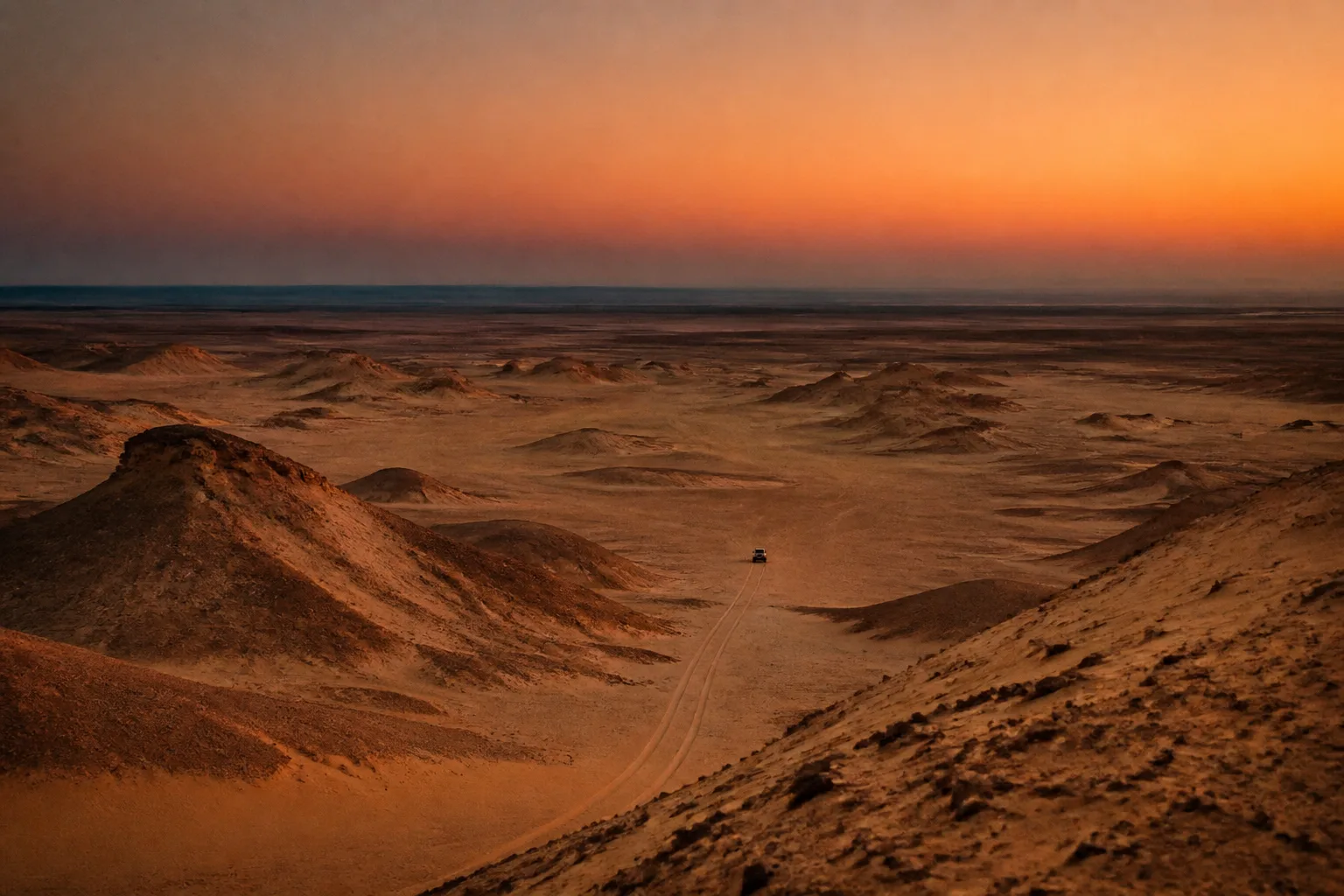
  2. Egyptian desert landscape – the arid terrain of the Sinai approach

    3 days · from Cairo

    Saint Catherine's Monastery & the Mount Sinai sunrise

    Depart Cairo by road through the Sinai. Arrive late afternoon, overnight near the monastery, pre-dawn ascent of Mount Sinai – roughly 3,750 steps of the Steps of Penitence – to the summit for first light. The monastery, the Burning Bush, the charnel house. Return to Cairo the following day.

    Tell us your dates
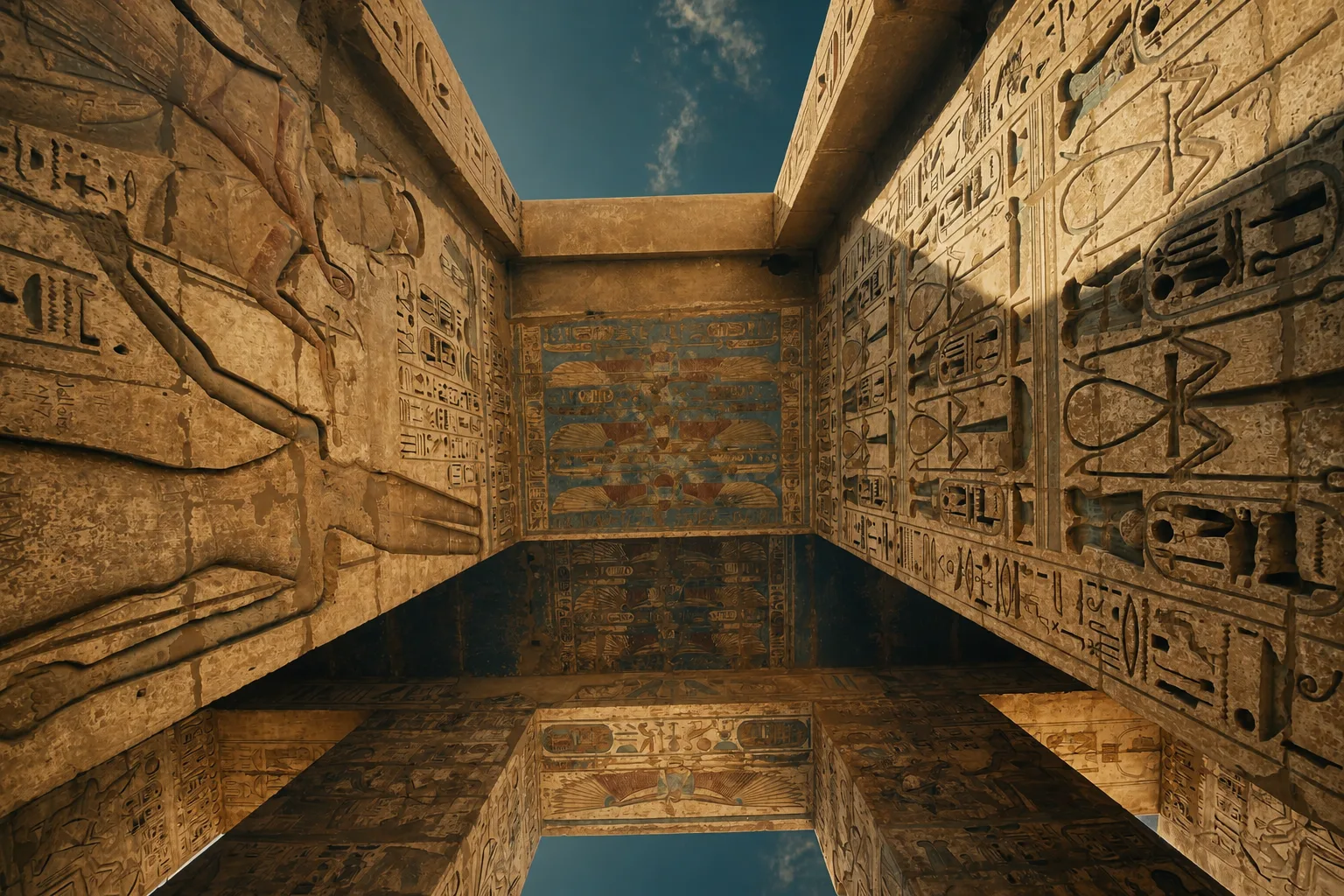
  3. Ancient hieroglyphs carved on a Karnak temple wall

    Full day · Cairo

    Three faiths in Old Cairo – in a single day

    Abu Sarga Church and its crypt. The Hanging Church suspended above the Babylon Fortress gateway. Ben Ezra Synagogue. Then across to Islamic Cairo: Al-Azhar, Sultan Hassan Mosque, and the Mosque of Ibn Tulun. The densest sacred square mile in the world, covered in one measured day.

    Tell us your dates

On the ground

Two places nothing quite prepares you for.

Reading about these sites is one thing. Standing inside them is another. Here is what a day at each actually looks like.

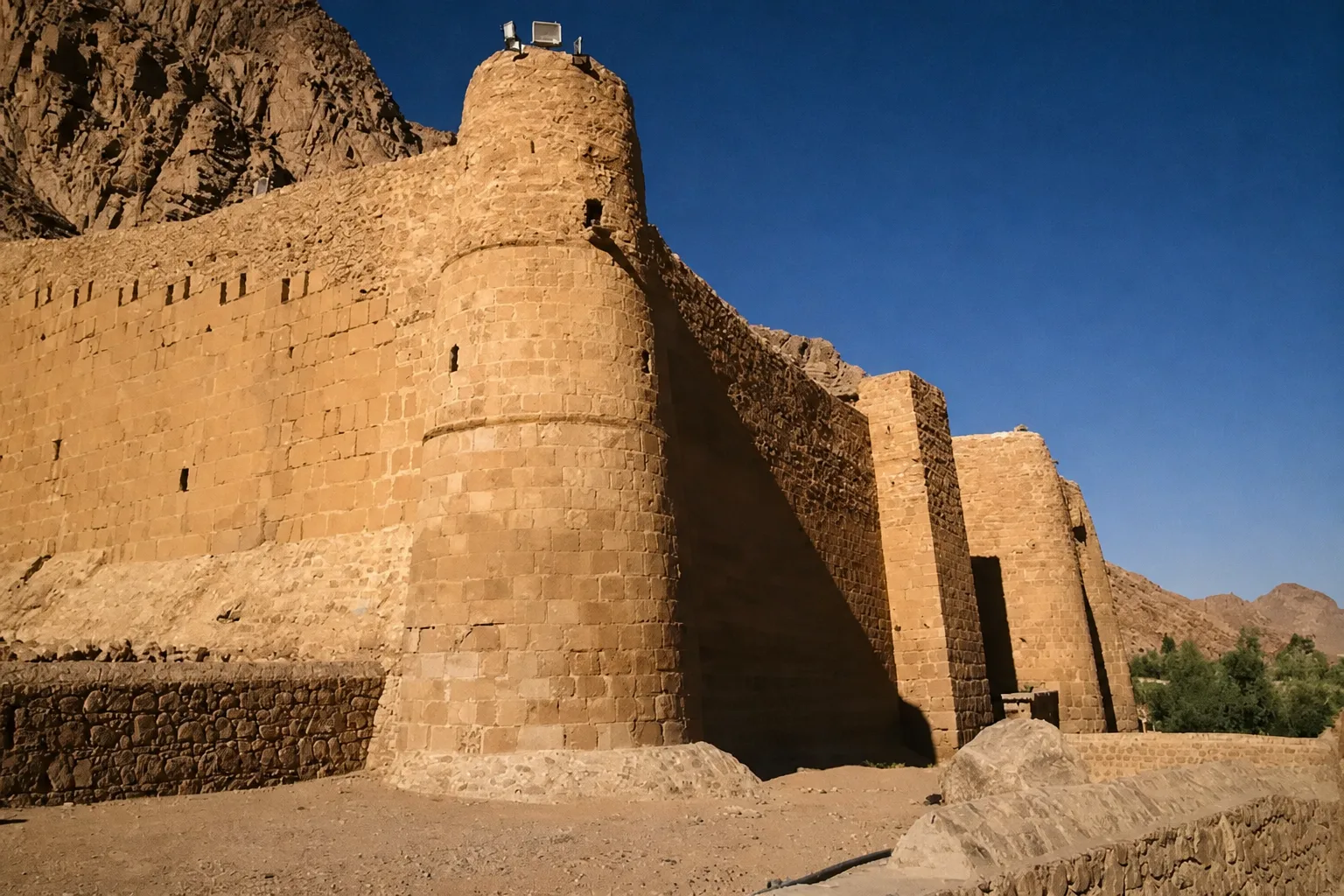
Saint Catherine's Monastery walls at the foot of the Sinai mountains, stone and silence

Saint Catherine's Monastery · Sinai · Founded 548 AD

The oldest monastery on earth – still inhabited.

You leave Cairo before dawn, cross under the Suez Canal, and drive four hours into the Sinai mountains. The monastery appears below the ridgeline before you expect it – smaller than photographs suggest and older than anything you have stood inside before. The Burning Bush grows in a walled courtyard behind the apse, tended without interruption since the 6th century. The library holds the second-largest collection of early Christian codices on earth after the Vatican. The Codex Sinaiticus – one of the oldest complete Bibles ever found – was discovered in a storage room here in 1844 and is now in the British Library.

The pre-dawn Mount Sinai climb – 3,750 steps of the Steps of Penitence – reaches the summit at first light. We depart for the summit at 2am and are back at the monastery gate by 7am, before the day's visitors arrive.

Old Cairo – stone walls and ancient lanes of the Babylon Fortress district at first light

Coptic Cairo · Babylon Fortress District · 1st century AD

Three faiths, three buildings, one short walk.

The Hanging Church is built above the south gateway of the Roman Babylon Fortress – a 1st-century structure – suspended over the arch, hence the name. Two hundred metres away, Abu Sarga Church has a crypt beneath the nave that Coptic tradition identifies as the room where the Holy Family sheltered in Cairo. The Ben Ezra Synagogue stands in the same walled district. Three faiths, three buildings, one short walk.

The streets between them are stone-paved, narrow, and quiet before the tour vans arrive. We get our groups there before 8am, when the quarter still belongs to its residents and the incense from morning prayers still hangs in the corridors.

Five things to know

What people ask before booking a pilgrimage to Egypt.

  1. 01 Which faiths are covered on a religious pilgrimage holiday to Egypt?

    All three Abrahamic faiths. Coptic Christianity has been present in Egypt since Saint Mark arrived in Alexandria around 42 AD – before Rome had its own bishop and before most of Europe encountered the faith. Egypt's Islamic heritage includes Al-Azhar, founded 970 AD and considered the world's oldest continuously operating university. Old Cairo's Ben Ezra Synagogue, rebuilt in 1115, stands on one of the most significant sites in Jewish tradition – and the Codex Sinaiticus, one of the oldest complete Christian Bibles, found at Saint Catherine's in 1844, is now in the British Library. A well-designed itinerary covers all three without rushing any of them.

  2. 02 What is the Holy Family Trail and how long does it take?

    The Holy Family Trail is a 3,500-kilometre route through 25 sites in Egypt where Coptic tradition holds the Holy Family rested during the flight from Bethlehem – as recorded in Matthew 2:13–15. The Pope of the Coptic Orthodox Church has formally numbered and designated all 25 stations. Covering every station in sequence takes two to three weeks. Most pilgrimage groups focus on eight to ten key sites: Old Cairo, Maadi, the Wadi El Natrun monasteries, and al-Muharraq Monastery near Assiut – where tradition holds the family stayed for six months and ten days, their longest stop on the trail.

  3. 03 Can non-Christians visit Coptic monasteries and churches?

    Yes. Egypt's monasteries and churches are active religious communities, not museums, but they welcome respectful visitors of any background. Covered shoulders and knees are required. Women are asked to cover their hair inside chapel areas. Some monasteries have male-only inner sanctuaries. Saint Catherine's Monastery (Greek Orthodox) opens to all visitors during morning hours – the monastery grounds and the 6th-century Transfiguration mosaic are fully accessible. Al-Azhar Mosque welcomes non-Muslim visitors outside prayer times.

  4. 04 When is the best time to visit Saint Catherine's Monastery?

    October to April. The monastery sits at 1,526 metres in the Sinai mountains and is noticeably cooler than the Nile valley year-round. The pre-dawn Mount Sinai climb – ascending roughly 3,750 steps of the Steps of Penitence to the 2,285-metre summit for sunrise – requires layers year-round; the peak can be well below freezing in winter. We pair Saint Catherine's with a Cairo departure: around seven hours by road via the Ahmed Hamdi Tunnel under the Suez Canal, an overnight near the monastery, the climb, and a return to Cairo the following day.

  5. 05 Do you run pilgrimage trips for church and parish groups?

    Yes. Church group travel is a distinct format: prayer times built into the schedule, a guide familiar with Coptic, Orthodox, and Catholic pilgrimage priorities, access arrangements for restricted areas of monasteries, and options for celebrating Mass or receiving communion at appropriate sites. The Cairo desk has planned Christian pilgrimage groups for over 20 years. Send us your group size, denomination, and dates and we'll draft a framework itinerary.

Tell us the tradition. We'll plan the rest.

Denomination, group size, how many days. A draft itinerary comes back within one working day.

We've planned Coptic pilgrimages, Catholic group tours, Islamic heritage journeys, and Jewish heritage visits in Egypt. Our own offices, 38 years, more than 10,000 travellers. We know the access, we know the schedules, and we know the guides who share the faith.

Begin the pilgrimage enquiry

– Suhaila, with the Cairo team