Karnak Temple & Luxor Temple – East Bank private visit
At a glance
- Departs
- Daily
The short answer
East Bank - Karnak Temple & Luxor Temple is a 1-day guided excursion covering Karnak Temple and Luxor Temple in Luxor, operated by Discovery Tours Egypt.
Best time to go
The most comfortable months are typically October through April, when daytime temperatures in Luxor are generally milder and easier for walking between monuments. From May to September, temperatures can be very high by late morning and midday, so an early departure is usually preferable. During Ramadan and major Egyptian holidays, opening patterns and crowd levels can vary, so timing should be confirmed in advance.
02Overview
A first look
Visit Karnak Temple and Luxor Temple on Luxor's East Bank with a private Egyptologist. The sites are approximately 2.5 km apart; allow three hours for a measured visit including short transfers.
Background
The facts
Karnak Temple and Luxor Temple are the two principal temple complexes on Luxor’s East Bank and are commonly visited together because they are only a short drive apart along the Nile. Karnak lies roughly 2.5 km north of Luxor Temple, and the transfer between them is typically completed in a few minutes by vehicle.
Karnak was developed over many centuries, with major construction phases from the Middle Kingdom through the Ptolemaic period. Its best-known features include the Great Hypostyle Hall, completed largely under Seti I and Ramses II in the 19th Dynasty, and the Avenue of Sphinxes, which once linked Karnak to Luxor Temple for ceremonial processions.
Luxor Temple was begun during the New Kingdom, especially under Amenhotep III and Ramses II, and later expanded by Tutankhamun, Horemheb, and Roman-era rulers. The site contains colonnades, courtyards, sanctuaries, and the seated statue of Ramses II, and it is notable for its central location within modern Luxor city.
A guided visit usually starts at Karnak because it is larger and requires more walking, then continues to Luxor Temple after the transfer. Standard entrance fees are included in this excursion; however, access to any restricted interiors or special add-ons would depend on the site rules and are not part of the standard inclusion unless stated separately.
Suited to
Is this for you?
Yes, if
- This excursion is suitable for first-time visitors to Luxor, history-focused travelers, and adults who want a structured introduction to New Kingdom temple architecture and religious symbolism. It also works well for visitors who prefer a moderate walking pace, short transfer times, and detailed explanation from a licensed Egyptologist.
What lingers
- 01Guided visit to Karnak Temple's Great Hypostyle Hall (134 columns) with our Egyptologist; entrance fees included.
- 02See Luxor Temple's Ramesses II statue and Avenue of Sphinxes; evening lighting available on request.
- 03Walk the colonnades and chapels built by Amenhotep III and Ramesses II; limited shade at midday.
- 04Short central Luxor hotel pickup; transfers in an air-conditioned private car with licensed driver.
- 05We avoid big coach groups; your visit averages 2–2.5 hours at Karnak and 45–60 minutes at Luxor Temple.
The fine print
What's included – and what isn't
Included
- Guided tour with a licensed Egyptologist
- Hotel pickup and drop-off within Luxor city limits or agreed meeting point
- Entrance fees to Karnak Temple and Luxor Temple
- Transfer between sites in an air-conditioned vehicle
- Bottled water, local taxes and service charges
Not included
- Gratuities for your Egyptologist and driver
- Optional extras such as sound-and-light shows, private photography permits, or museum visits
- Meals unless specifically stated in your booking
- Any premium-experience fees not listed in inclusions
Indicative rates only – pricing and departure fluctuate. Please enquire for live rates on your specific dates.
Asked & answered
Frequent questions
01How long does the visit to Karnak Temple and Luxor Temple take?
A standard visit to Karnak Temple and Luxor Temple typically lasts about three to four hours. We usually run this as a private guided visit with one of our Luxor-based Egyptologists rather than a large coach group. Expect slow walking, stops for inscriptions and the Hypostyle Hall at Karnak; the route is flexible depending on your pace. Midday can be hot and crowded; many clients prefer an early-morning start to avoid both heat and coach arrivals.02Are entrance fees and the Egyptologist included?
Standard entrance fees for Karnak Temple and Luxor Temple are included unless we state otherwise. A private Egyptologist from our team accompanies most private visits and their fee is normally included in the tour price. We are a licensed Egyptian tour operator and handle local permits, guides, and entrance arrangements. Extras such as special-access permits, private audio guides, or sound-and-light tickets are not included unless specified.03Is this visit suitable for people with limited mobility?
Karnak Temple and Luxor Temple have uneven ancient stone pavements and steps; parts are not wheelchair-friendly. Many routes include cobbles, shallow steps and unshaded stretches; transfers by vehicle can reduce walking but cannot remove all uneven ground. We can pace the visit, provide closer drop-offs and a private car, and advise exactly which areas are accessible on request. If full wheelchair access is essential, tell us at enquiry so we can propose alternatives or additional support.04What should I wear and bring for the visit?
Wear comfortable, modest clothing and sensible shoes for uneven surfaces; bring sun protection and a refillable water bottle. Temples expect modest dress (shoulders and knees covered); a wide-brimmed hat, high-SPF sunscreen and sunglasses are essential in summer. Small backpacks are manageable, but security checks can be restrictive; leave large luggage at your hotel. If you plan an early-morning start, a light layer is useful for cooler winter mornings.05Can I photograph at Karnak and Luxor temples, and are tripods allowed?
Photography with handheld cameras and smartphones is normally permitted at Karnak Temple and Luxor Temple. Tripods, drones and professional filming usually require prior permission and may be restricted at specific monuments. We can arrange filming permits in advance, but permits often incur extra fees and several days' lead time. Visitors should respect on-site signage and the guidance of our Egyptologist regarding flash, tripod use and sensitive reliefs.06Can I combine the East Bank temples with West Bank sites on the same day?
You can combine East Bank temples with West Bank sites, but this requires an early start and a longer day. Crossing to the West Bank adds travel time, extra entrance fees for tombs and more walking over uneven ground, so the day becomes full rather than relaxed. Unlike quick cruise-ship shore calls that often only include East Bank highlights, a combined private programme lets you see both banks properly if you allow the full day. Tell us which West Bank sites you prefer and we will propose a feasible itinerary.
If plans change
Cancellation
- More than 30 days
- Full refund less a £50 admin fee
- 15–30 days
- 50% refund
- Within 14 days
- No refund – date changes considered case by case
Product ID: EXC-LUX-454376
You Might Also Like
 Aswan
AswanAbu Simbel by Plane from Aswan – Day Tour
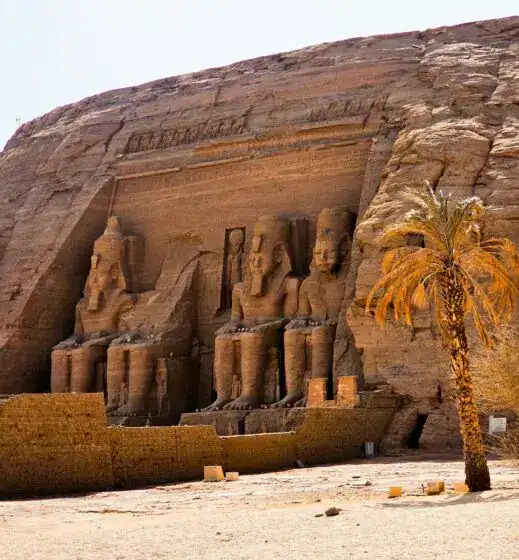
We arrange a private return flight from Aswan International Airport (ASW) to Abu Simbel Airport (ABS) for a day visit to the temples at Abu Simbel. Flight time is approximately 40–50 minutes each way. On arrival our English-speaking Egyptologist will guide you at the Great Temple of Ramesses II and the Small Temple of Nefertari. The site forms part of the Nubian Monuments from Abu Simbel to Philae (UNESCO, 1979). We include standard site entrance fees, airport handling and domestic flight taxes, and private transfers to and from your Aswan hotel or Nile cruise. Practical notes and trade-offs: the tour requires an early start and is tightly scheduled according to domestic flight timetables; the on-site visit is usually brief (typically 1–2 hours) so you should expect a short, focused walk around the façades and interiors. There is limited shade at the site and much walking is on uneven ancient stone. Photography opportunities are best outside the temples; the solar alignment that illuminates the inner sanctuary of Ramesses II occurs around 22 February and 22 October each year. Flights use regional aircraft and luggage/weight limits set by the carrier apply. The tour is operated by our Egyptologists and ground team, licensed by the Egyptian Tourism Authority (ETAA).
From £374
 Aswan
Aswan1 Days
Abu Simbel by Road from Aswan Day Tour
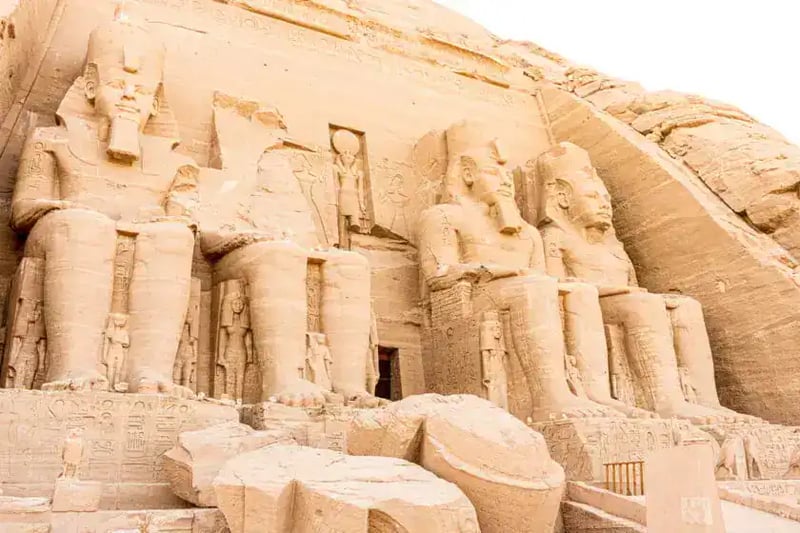
A full-day road transfer from Aswan to the twin rock-cut temples at Abu Simbel, returning the same day. Walk among the four seated colossi of the Great Temple of Ramesses II and cross to the adjacent Temple of Nefertari, both moved above the original Nile shore during the 1960s resettlement. We are a licensed Egyptian tour operator and can confirm local entrance arrangements and Egyptologist-guided visits. The road option lets you see Lake Nasser and the desert landscape between Aswan and Abu Simbel, rather than traveling by air.
From £72
 Cairo
CairoAlexandria 2 Nights from Cairo – Wad Natrun & Pompey's Pillar
Two-night private itinerary from Cairo to Alexandria, visiting Wad Natrun monasteries, Pompey's Pillar, the Kom el-Shoqafa catacombs, the Bibliotheca Alexandrina and the Roman Museum. We are a licensed Egyptian tour operator and we arrange private transfers and an Egyptologist to accompany key visits. Cairo to Alexandria is about 220 km (roughly 2.5–3 hours by car). Unlike rushed one-day coach excursions, this itinerary gives you two nights and a full day in Alexandria to see the main sites at a steady pace. Trade-offs: expect early starts, a long road transfer each way and limited shade at several outdoor sites.
From £179