What does a typical day on a Nile cruise look like?
The days settle into a lovely rhythm. You explore the major sites in the cooler morning hours alongside your private Egyptologist, then head back aboard for lunch and cast off. The afternoon is yours as the riverbanks drift past, and the evening brings dinner, a drink on the sundeck and a little entertainment.
Nothing feels hurried. There is no nightly packing and no searching for somewhere to eat, because your floating hotel follows the same route you do. The sightseeing and the downtime simply weave together.
Will I get seasick on the Nile?
Almost certainly not. The Nile is a calm inland river rather than open sea, so the movement aboard is minimal even on a sailing dahabiya. Travellers who give ocean cruises a miss because of motion sickness are nearly always completely at ease here.
The water is smooth and the pace is unhurried. Most guests forget they are moving at all until they look up and spot a fresh run of palm groves gliding by.
Is there Wi-Fi on board?
Every 5-star and deluxe ship carries satellite Wi-Fi. The speed is modest rather than quick, but it copes happily with messaging, email and the odd photo upload. The signal can dip between towns, which is normal on a moving vessel.
Traditional sailing dahabiyas are usually offline, and that is genuinely part of the charm. If staying connected matters, choose a larger motor ship; if you would rather switch off, the dahabiya does it for you.
Motor cruiser or sailing dahabiya, which suits me?
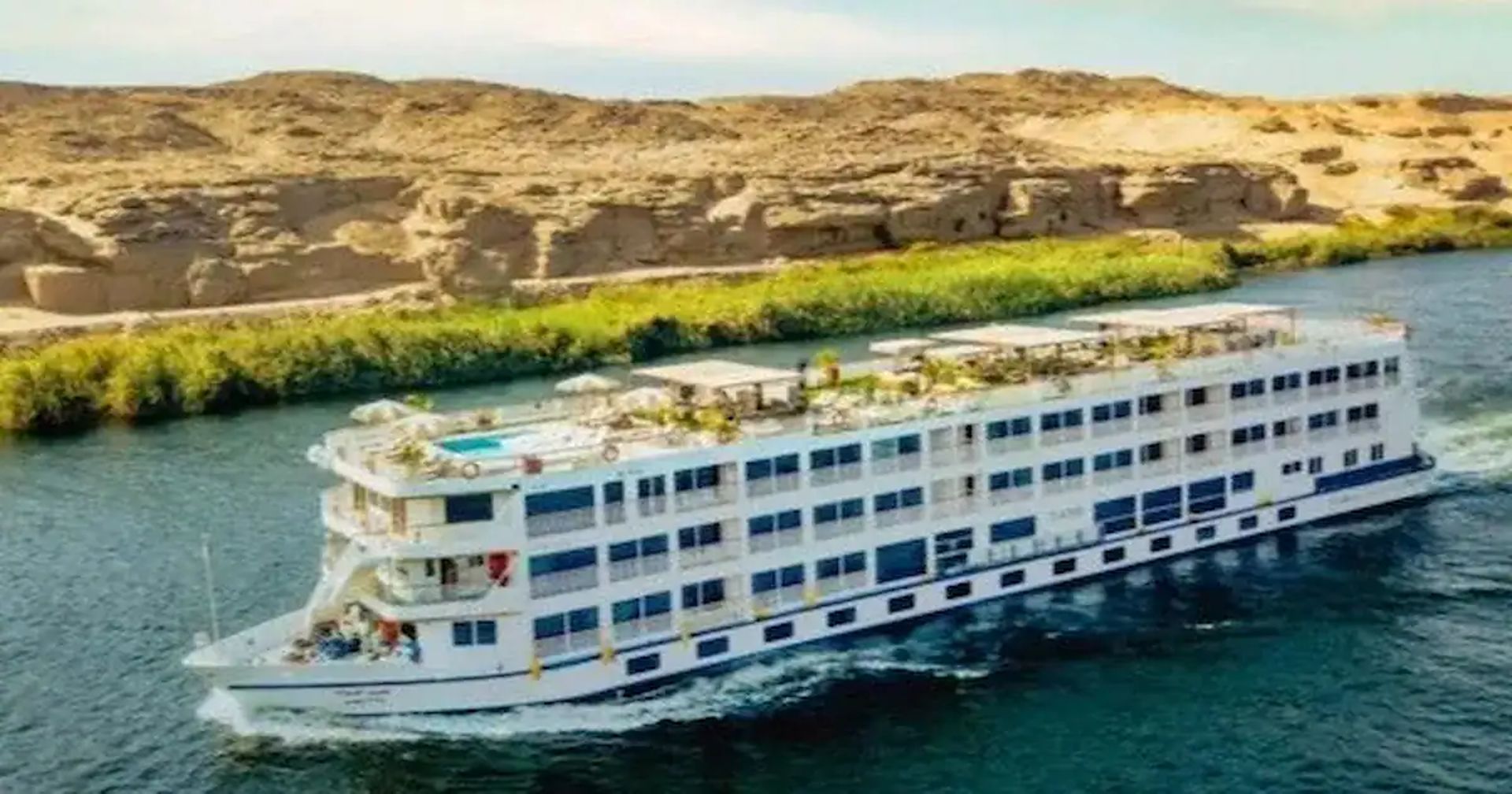
A motor cruiser is the classic Nile experience: a sundeck pool, full amenities, satellite Wi-Fi and typically 40 to 80 cabins. It is sociable, comfortable and moves at a steady pace between the sites.
A dahabiya is a small sailing boat with only a handful of cabins. It travels with the wind, moors at quiet spots the larger ships pass by, and swaps Wi-Fi and a pool for intimacy and calm. Both sail the same river; they simply feel worlds apart.
- Motor cruiser: pool, satellite Wi-Fi, more cabins, sociable, ideal for first-timers
- Dahabiya: 6 to 12 cabins, wind-powered, offline, moors at hidden coves, beautifully quiet
- Both include a private Egyptologist, all temple admissions and full board
Which temples and stops are on the route?
Nile cruises sail the celebrated Luxor to Aswan stretch, in either direction. Along the way you moor to explore the riverside temples that give this route its reputation, each one led by your Egyptologist so the history makes sense.
- Luxor: Karnak, Luxor Temple and the West Bank tombs
- Edfu: the superbly preserved Temple of Horus, often reached by horse-drawn carriage
- Kom Ombo: the twin temple on the riverbank, glowing at sunset
- Aswan: the island Temple of Philae, the High Dam and felucca sailing
What are the meals and evenings like?
Full board is standard, so breakfast, lunch and dinner are all included, usually as generous buffets of Egyptian and international dishes. Afternoon tea often appears on the sundeck, and drinks are available at the bar.
Evenings are relaxed. Many ships host a galabeya night, where you can borrow a traditional costume and join in, along with live music, a belly-dance show or a quiet nightcap beneath the stars. Dress is smart-casual once the sun goes down.
What exactly is included in the price?
A Discovery Tours Egypt cruise bundles the parts that matter, so there are no nasty surprises. Your fare covers the cabin, full board, a private Egyptologist guide and every temple admission on the itinerary.
- Your cabin and full board (breakfast, lunch, dinner)
- A private, licensed Egyptologist guide throughout
- All temple and site admission fees on the route
- Onboard sundeck, pool on motor ships and evening entertainment
Tips for the crew and guide are extra and always welcomed, and we hand you a printed tipping guide at embarkation so you are never left guessing.
Plan with us
What to expect on a Nile cruise: a day on board
What a day on a Nile cruise is really like: temples with your Egyptologist, sailing, meals, Wi-Fi, seasickness and what's included. An honest UK guide.