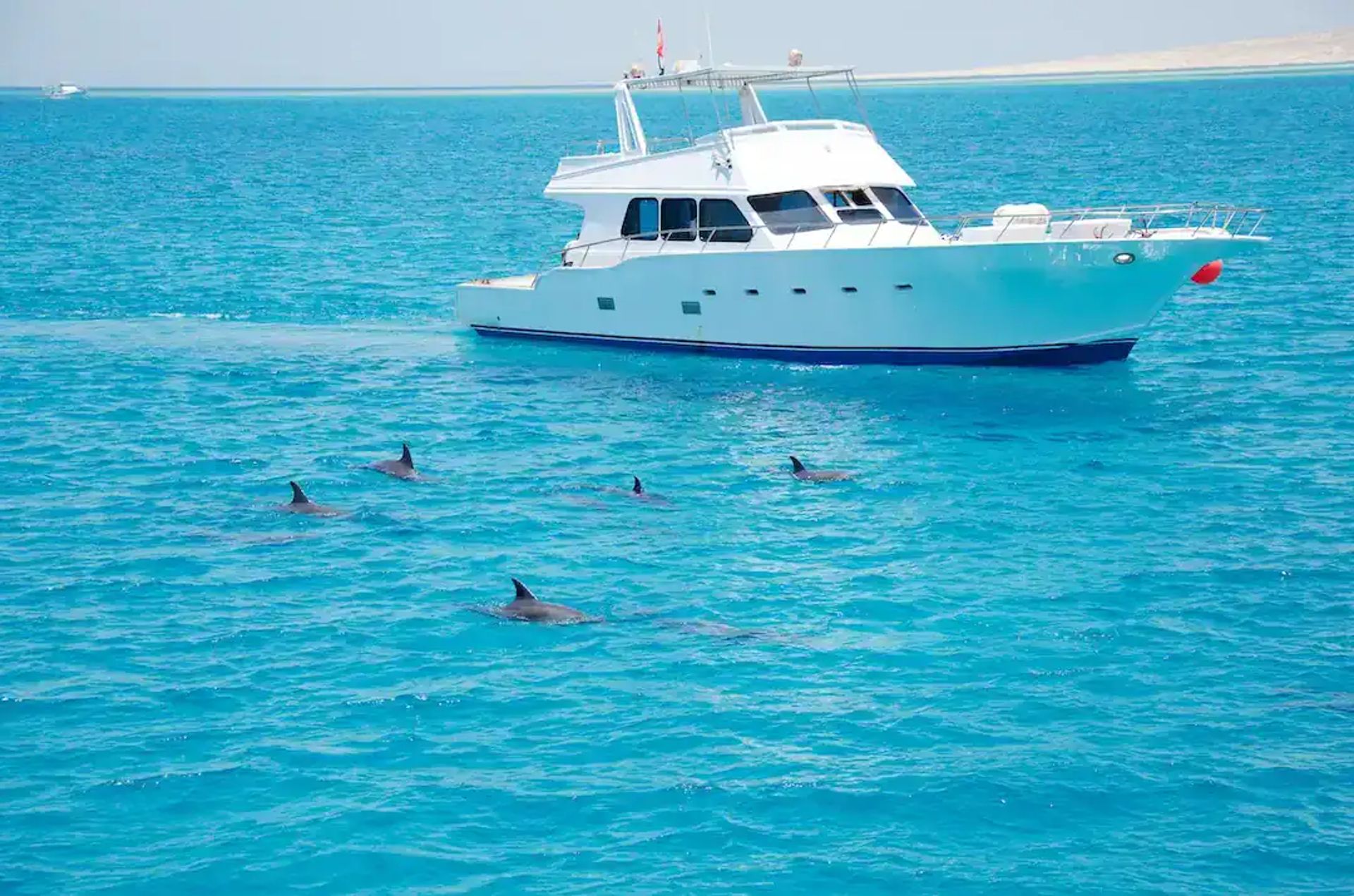
Dolphins that live in open water come into sheltered reefs to rest during the day. Two of those reefs, Samadai and Sataya, have become the best-known places on this coast to meet them. The trips are different in length and feel, so it helps to know what you are signing up for.
Samadai: the shorter day
Samadai is a horseshoe-shaped reef. A boat takes about half an hour from the harbour, so you reach the water by mid-morning. The pick-up is around 06:30, and you are back at the hotel mid-afternoon. It is the easier choice for a family or for anyone who wants the dolphin experience without a big commitment.
The reef is protected, and that shapes the day. Swimming is allowed only in the permitted zone, life jackets are compulsory there, and the dolphins are watched from a respectful distance. Rest areas are left alone on purpose. Expect a second snorkel on a nearby reef and lunch on board.
Sataya: the longer expedition
Sataya is a reef in the far south. The journey starts before dawn, at 04:30, with a drive of two hours or more to Hamata harbour, and then about an hour and a half by boat. You snorkel from the boat where conditions allow, have lunch on board and make a second stop on a nearby reef. You arrive back at your hotel in the evening.
- Samadai: about 8 hours, 30 minutes by boat, easy for most ages.
- Sataya: about 13 hours, a long road and a longer boat ride.
- Both: snorkel kit, lunch, tea, coffee and water are provided on board.
Which suits you
Pick Samadai if you are travelling with children, if you dislike early starts or if you want time for another outing in the same week. Pick Sataya if you have already done the shorter trip or you enjoy a big day and a sense of distance. Strong swimmers who are happy in open water get the most from either.
What about the dolphins themselves
Spinner dolphins hunt at night and rest by day. That is why the boats go in the morning. The animals decide whether to come close, and some mornings they stay out of sight. Treat a sighting as a gift. If they do appear, float quietly, do not chase, and never touch.
Good snorkelling is the safety net. Both trips include reef stops with colourful fish and corals, so the day is worth it even when the dolphins are elsewhere.
Season and sea
The water is warm enough for most people to snorkel without a wetsuit from spring through autumn, and a shorty or a thin suit helps in winter. Wind can make the crossing bumpy, and the skipper may adjust the route. Follow the crew's instructions.
Plan with us
Sataya or Samadai – which of the two dolphin reefs suits you?
Samadai is closer and shorter, Sataya is further south and longer. Compare journey times, snorkelling rules and who each dolphin reef trip suits.