The short answer
Pharaohs wore linen garments, especially the pleated shendyt kilt, alongside crowns and headdresses that identified their authority. Their clothing signalled status, religion and Ma’at, the principle of cosmic order.
Royal dress was not simply a matter of comfort or fashion. Pharaohs were seen as intermediaries between people and the gods, so clothing and regalia helped express their role in maintaining order. Fine linen, symbolic colours and distinctive headgear made that role visible in images and ceremonies.
Everyday dress: linen and the shendyt kilt
Linen made from flax grown along the Nile formed the basis of ancient Egyptian clothing. Royal linen was finer, smoother and whiter than the simple linen worn by ordinary people. It could also be so fine that it appeared translucent. Garments were often pleated or starched, giving cloth a carefully arranged appearance.
The shendyt was a wrapped, pleated linen kilt and the best-known garment associated with a pharaoh. It symbolised kingship, and royal versions could carry gold thread. In early images, pharaohs often appear bare-chested with the kilt. Later depictions show short-sleeved linen tunics as well. Ceremonial cloaks and sheer overlays were worn for rituals and festivals.
The main garments and details to recognise include:
- The shendyt: a wrapped, pleated linen kilt associated with kingship.
- Fine royal linen: smoother and whiter than everyday linen, sometimes shown as translucent.
- Short-sleeved tunics: added to royal dress in later periods.
- Cloaks and sheer overlays: worn for ceremonial occasions such as rituals and festivals.
- Gold thread: a possible detail on royal shendyt kilts.
What the colours meant
Colour carried symbolic meaning in royal clothing and regalia. White represented purity, while gold was associated with the flesh of the gods and eternity. Blue referred to protection and the heavens. Red could express power, chaos and strength, and green was linked with regeneration and rebirth.
These meanings help explain why colour matters when looking at royal images. A coloured detail is not merely decoration: it can contribute to how a ruler’s authority, religious role or relationship with the gods was presented. The meaning depends on the colour shown, so it is better to read each detail in its visual context than to assume every colour had only one use.
Crowns and headdresses
Royal headgear identified the pharaoh through recognisable forms. Standard identifications seen in temple carvings and statues include the white crown of Upper Egypt, the red crown of Lower Egypt and the double crown, which combines the two. The striped nemes headcloth is another familiar form. A cobra, called the uraeus, was worn at the brow.
These items were more than practical coverings for the head. Their distinctive shapes helped distinguish a ruler in carved and sculpted images. When viewing a statue or relief, look at the outline of the crown and any cobra at the forehead before trying to identify the garment. The combination of headgear and clothing helps make royal status legible in the image.
How we know: evidence
Knowledge of royal dress comes from tomb paintings, reliefs, statues, temple carvings, ancient texts and surviving objects. Finds include jewellery, sandals and crowns. The tomb of Tutankhamun produced well-preserved royal items, giving evidence beyond images of what royal objects could look like.
Tip: At a temple or tomb, compare the carved clothing with any surviving objects you see in a museum. Images show how garments were represented, while finds such as sandals and crowns provide physical evidence.
Each kind of evidence answers a slightly different question. A relief or statue shows how a pharaoh was depicted, while an object from a tomb is a surviving item. Ancient texts add another source of information. An Egyptologist guide can help read the carvings on site and point out the clothing and symbols shown.
How royal dress differed from ordinary Egyptians
Both royal and ordinary clothing used linen, but the quality and presentation differed. Ordinary people wore simple linen, while royal linen was finer, smoother and whiter, and could be translucent. The shendyt was closely associated with kingship, and royal versions could include gold thread. Crowns and the uraeus further marked the pharaoh’s position.
The contrast was therefore not only between one garment and another. Fabric quality, pleating, colour and royal regalia combined to signal status and religious authority. The pharaoh’s role as an intermediary between people and the gods made those visual distinctions part of how kingship was presented.
Seeing it today
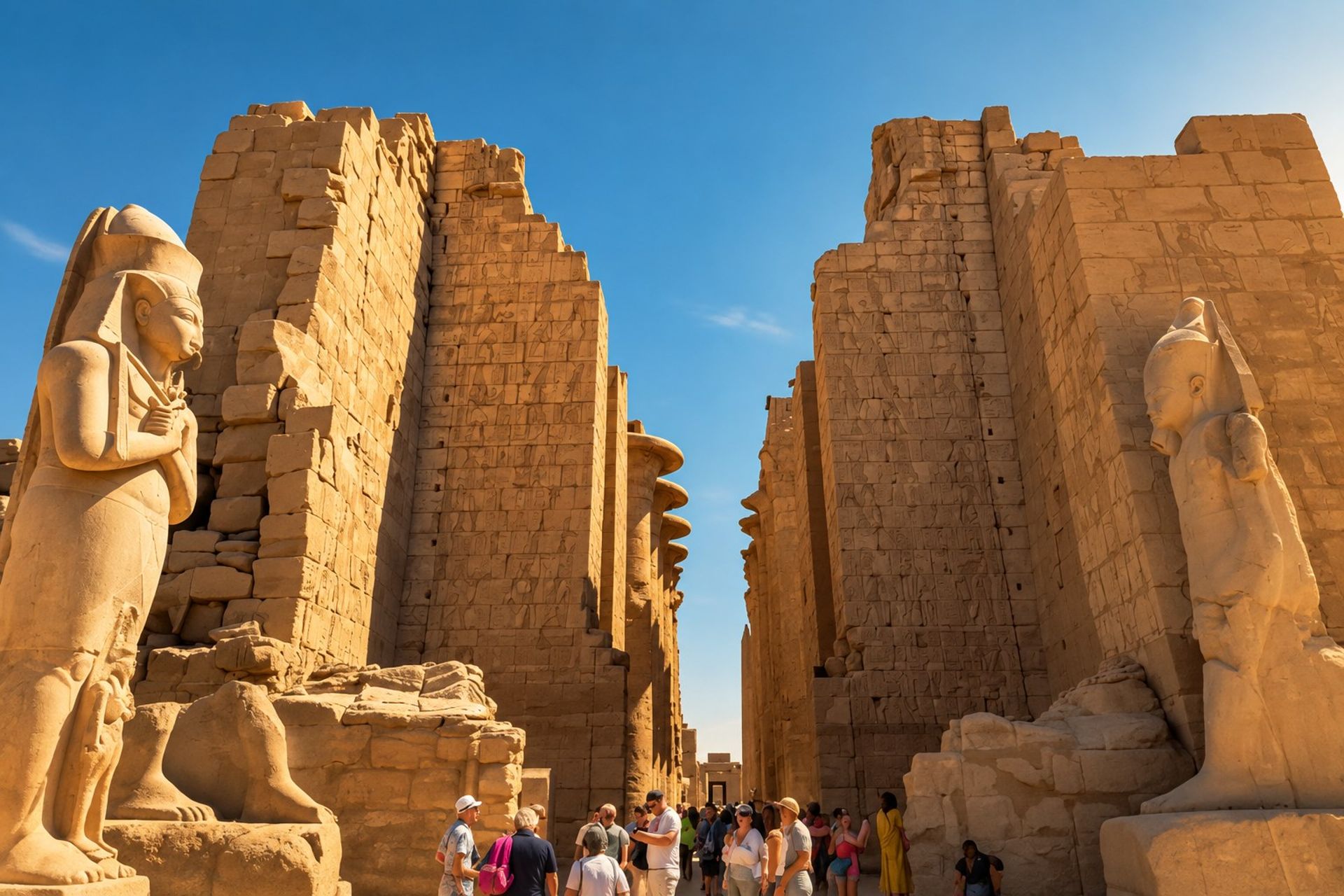
Visitors can see depictions of royal clothing in reliefs and statues at temples such as Karnak and in tombs in the Valley of the Kings. Royal treasures are also held in Egypt’s museums. Look for the pleated shendyt, the shape of the crowns, the nemes headcloth and the cobra at the brow; these details help distinguish royal dress from a general image of ancient clothing.
An Egyptologist guide can explain what a carving shows while you are standing in front of it. For a more rewarding visit, take time to look closely at the carved details rather than treating each figure as a simple portrait.
Plan with us
What did the pharaohs wear?
What did the pharaohs wear? Pleated linen kilts, the meaning of colours, royal crowns and the evidence we have, plus where to see it in Egypt today.